

It’s easy to feel overwhelmed by the daily headlines about climate change and environmental challenges. Yet, amidst the gloom, a powerful wave of innovation is emerging, offering real hope: green technology.
Forget those dystopian sci-fi scenarios; the reality is that the most brilliant minds on the planet are leveraging cutting-edge tools to develop solutions that aren’t just eco-friendly but are also effective, scalable, and often profitable. This isn’t just about turning off the lights—it’s about a complete technological transformation aimed at preserving our home.
In this deep dive into Green Tech 2025, we’re going to explore how groundbreaking technologies are fundamentally changing the fight for a sustainable future.
The Core Pillars of a Sustainable Tech Revolution
To understand the full scope of this shift, it helps to break down the key areas where technology is having the biggest positive impact.
1. Renewable Energy: Smarter Grids and Storage
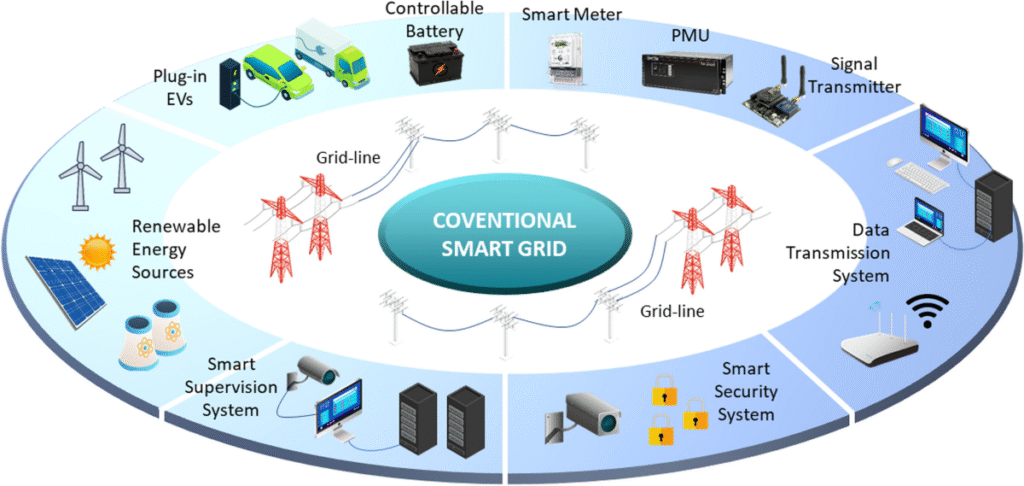
The most obvious area is, of course, energy. We’ve all heard about solar panels and wind farms, but the next generation of renewable tech is far more sophisticated. The real challenge isn’t just generating clean power, but storing it and distributing it efficiently.
- Original Insight: Think about it: a sunny day in Arizona generates a massive power surplus, while a cloudy day in London creates a deficit. The solution? Advanced battery storage (like improved lithium-ion and flow batteries) and smart grids that use AI to predict energy needs and reroute power in real time. This allows us to keep the lights on with clean energy, regardless of what the weather is doing.
2. Efficiency: Digital Twins and AI Optimization
Sometimes, the best green solution isn’t creating something new, but making what we already have work better. This is where the power of data shines.
- Relatable Example: Companies are now using digital twins—virtual copies of real-world factories or city buildings—to run simulations. By adjusting virtual air conditioning, lighting, and machinery settings, engineers can identify the single most efficient way to operate a facility, leading to massive cuts in real-world energy waste. It’s like test-driving a car for fuel efficiency before it ever leaves the factory floor.
3. Circular Economy: Waste as a Resource
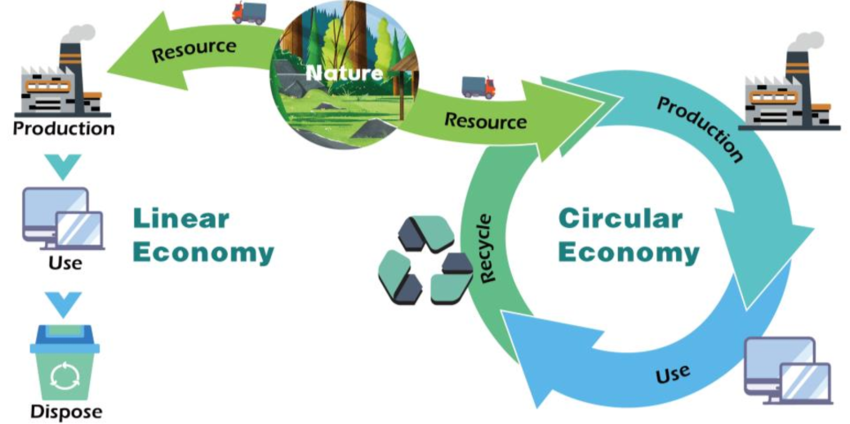
The old model of “take, make, and dispose” is fundamentally unsustainable. Green tech is flipping the script, treating “waste” not as trash, but as a valuable raw material.
- Key Idea: This includes advanced recycling robotics that can sort materials far faster and more accurately than humans, and biotechnology that is literally engineering microbes to break down plastics into reusable compounds. The goal is a truly circular economy where materials stay in use forever.
4. Smart Agriculture: Growing More with Less
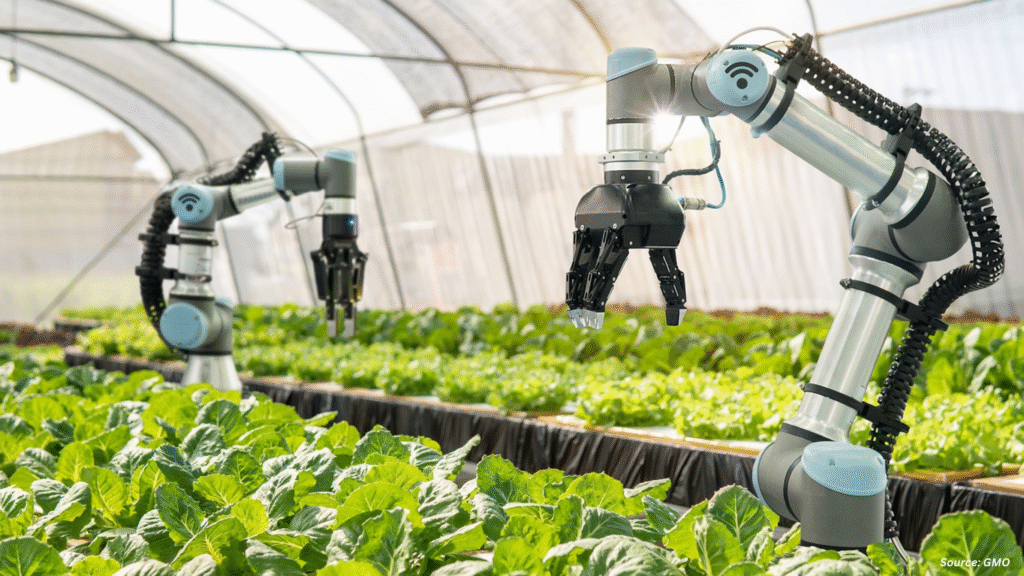
The way we produce our food has a huge environmental footprint, demanding massive amounts of land, water, and often, chemical fertilizers. Fortunately, technology is leading the charge toward a more sustainable farming future, often referred to as Agri-Tech or Climate-Smart Agriculture.
- Extra Explanation: Imagine a farmer knowing the exact nutrient needs of a single square foot of soil in a 100-acre field. That’s the reality now. Technologies like the Internet of Things (IoT) use sensors to monitor soil moisture, temperature, and nutrient levels in real time. This allows for precision irrigation, meaning water is applied only where and when it’s needed, cutting water waste drastically.
- Original Insight: Beyond the field, vertical farming and indoor agriculture are solving the land-use problem entirely. By growing crops in stacked layers indoors, usually in urban centers, we can use 99% less water than traditional farming and eliminate the need for long-distance transport. It’s truly a win-win for resource conservation and fresh food access.
5. Carbon Capture and Climate Tech: Cleaning the Air Itself
While reducing emissions is the priority, what about the centuries of carbon pollution already floating in the atmosphere? This is where arguably the most ambitious category of green tech comes in: Carbon Capture, Utilization, and Storage (CCUS).
- Changing the Order: Instead of just stopping pollution at the source, new innovations like Direct Air Capture (DAC) technology are effectively building giant mechanical “trees.” These machines suck carbon dioxide directly from the ambient air.
- Conversational Tone: Now, DAC is still incredibly energy-intensive, and that’s a hurdle we need to clear quickly. But the research is rapidly evolving. The dream is to not only store this captured carbon deep underground (sequestration) but to turn it into something useful, like synthetic fuel or building materials (utilization). It’s a powerful idea: making clean industry profitable by literally selling recycled air.
6. Green Mobility: The Shift to Electric and Beyond
Our personal and commercial transportation system is undergoing a foundational change, moving away from the internal combustion engine and toward electric power.

Key Idea: The innovation here isn’t just the electric vehicle (EV) itself, but the batteries that power them. Engineers are focusing on solid-state batteries, which promise faster charging, longer range, and fewer concerns about flammability than current lithium-ion models. This makes EVs more practical for everyone, from the daily commuter to the heavy-duty trucking industry.
- Smooth Transition: But the shift is broader than just cars. Green hydrogen, produced by using renewable energy to split water, is emerging as a critical clean fuel for sectors that batteries can’t easily handle, like long-haul shipping and aviation. It’s an essential piece of the puzzle for completely decarbonizing global logistics.
The Path Forward: A Human-Powered Tech Future
The takeaway from these developments is clear: technology isn’t passively waiting; it is actively providing the tools we need to achieve true sustainability.

However, a technology-led future still requires human commitment. The success of Green Tech 2025 depends on government policy, investor capital, and, most importantly, the willingness of businesses and consumers to adopt these greener alternatives, even when it requires a little adjustment. By embracing these powerful innovations, we are building a more resilient, cleaner, and ultimately, more prosperous world.
#TechnologyTrends2025 #AIRevolution #FutureTech #DigitalInnovation #Carrerbook#Anslation#SmartDevices #GreenTech #Cybersecurity #QuantumComputing #TechUpdates #Metaverse